
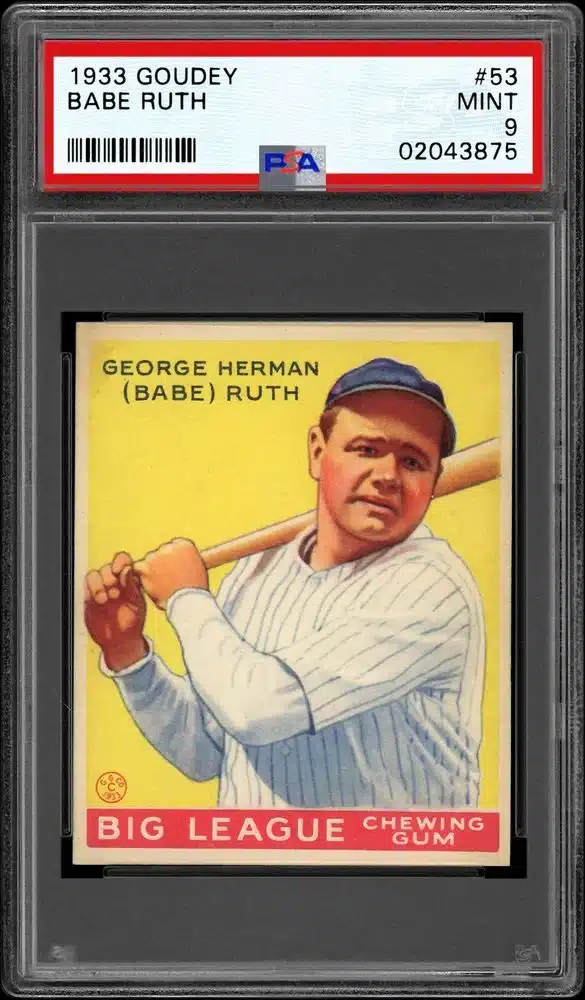
Babe Ruth Cards: A Collector’s Guide His Most Iconic Cards
No name carries more weight in sports collecting than George Herman Ruth. Nearly a century after his playing days, Babe Ruth cards remain the cornerstone of countless collections, the centerpiece of auction headlines, and the first thing many new collectors ask about. Whether you are hunting for your first affordable Ruth or building a vintage collection around the Sultan of Swat, this guide covers the key cards, what drives their value, and how to buy smart.
At Boston Card Exchange, we have a particular soft spot for the Babe. Before he became a Yankee legend, he was a Boston Red Sox pitcher, and his story is woven into the history of our city. Let’s dig in.
Why Babe Ruth Cards Are the Gold Standard of Vintage Collecting
Babe Ruth did not just play baseball. He changed it. He hit 714 career home runs, smashed 60 in 1927, and turned the long ball into the sport’s biggest attraction. He was also a member of the Hall of Fame’s inaugural class in 1936, and he remains one of the most recognizable Americans who ever lived.
That fame translates directly to the card market. Ruth cards benefit from three things that rarely line up so perfectly:
- Historic significance: He is the face of baseball’s transition from the dead-ball era to the modern game.
- Scarcity: Many of his earliest cards were printed in small quantities and were handled, traded, and thrown away by kids a century ago.
- Constant demand: Baseball collectors, vintage specialists, and investors all want Ruth, which keeps the market deep in every price range.
The result is a hobby staple that has proven resilient across decades of changing trends.
The Most Important Babe Ruth Cards to Know
Ruth’s cards span his minor league days through his post-career tributes. Here are the issues every collector should recognize.
1914 Baltimore News Babe Ruth
Often considered the true holy grail, this is Ruth’s earliest known card, issued when he was a young pitcher with the minor league Baltimore Orioles. Only a tiny number of examples are known to exist. When one surfaces publicly, it commands seven figures, so this one is more about admiring the history than adding it to your wish list.
1916 Sporting News
Many collectors consider the 1916 Sporting News card his true major league rookie card. It shows Ruth in a Red Sox uniform during his dominant years as a left-handed pitcher, well before the Yankees era. It is a landmark card with a loyal following and strong long-term demand.
1933 Goudey Babe Ruth Cards
If there is one set that defines Ruth collecting for most people, it is the 1933 Goudey Big League Chewing Gum set. Ruth appears on four cards in the set (#53, #144, #149, and #181), and all four are cornerstone vintage cards. Because there are multiple Ruth cards, this is also one of the more accessible entry points, depending on condition. Lower grade copies can be a realistic goal for serious collectors, while high grade examples bring top dollar.
1933 Goudey Sport Kings
This multi-sport set gives collectors another Ruth card with great eye appeal. It is a popular pick for people who want a Ruth that is a little different from the standard baseball issues.
1948 Leaf Babe Ruth
Released around the time of Ruth’s passing and the Babe Ruth Story film, the 1948 Leaf card is a post-war favorite. It is often more attainable than the pre-war cards and makes an excellent starting point for newer collectors building a Ruth collection on a budget.
Modern Tributes and Reprints
Over the years, card companies have produced tribute, insert, and autograph-style cards honoring Ruth, including relic cards featuring game-used bat material. These are generally far more affordable than vintage issues and let collectors enjoy Ruth cards without a vintage price tag. Just be sure the card is clearly identified as a modern issue or reprint so there is never any confusion down the road.
What Drives the Value of Babe Ruth Cards
Not all Ruth cards are priced equally, even within the same set. A few factors do most of the work:
Condition and grade. For vintage cards, condition is everything. The gap between a lower grade and a high grade example can be enormous. Look at centering, corners, edges, and surface quality.
Scarcity and population. Third-party grading companies publish population data showing how many examples have been graded. Fewer high-grade copies usually means higher prices.
Year and set significance. Rookie-era and iconic set cards sit at the top of the pyramid. Cards from the 1933 Goudey run and earlier tend to dominate demand.
Eye appeal. Two cards with the same grade can sell for noticeably different amounts based on color, print quality, and overall look. Vintage collectors often pay a premium for a card that simply looks great.
Market timing. Prices shift with auction results, economic conditions, and collector sentiment. Following recent sales is the best way to understand what a card is actually worth.
Why Grading Matters for Ruth Collectors
With vintage cards of this importance, professional grading is practically essential. Third-party services such as PSA, SGC, Beckett (BGS), and CGC authenticate cards, assign a condition grade, and seal them in a protective holder. For Babe Ruth cards, that matters for three reasons:
- Authentication. Counterfeits of Ruth cards exist, and grading provides an expert opinion on whether a card is genuine.
- Standardized condition. A grade gives buyers and sellers a common language, which makes pricing more transparent.
- Liquidity. Graded cards are easier to sell and to compare against past sales.
If you are considering a raw (ungraded) Ruth card, be extra cautious. Ask for clear scans, ask about return policies, and consider whether submitting it for grading makes sense.
How to Spot Fakes and Reproductions
Because Ruth is so valuable, he is also one of the most frequently faked players in the hobby. Protect yourself with a few simple habits:
- Buy from reputable sellers. Look for dealers with a track record, clear return policies, and a willingness to answer questions.
- Prefer authenticated cards. A card in a reputable grading holder removes much of the guesswork.
- Be skeptical of bargains. If the price on a vintage Ruth seems too good to be true, it almost always is.
- Check the details. Reproductions can show modern printing patterns, incorrect card stock, or off colors. When in doubt, get a second opinion.
- Verify the holder. Confirm certification numbers on the grading company’s website.
Tips for Buying Babe Ruth Cards on Any Budget
You do not need a six-figure budget to join the club. Here is how collectors at different levels approach Ruth:
Starter budget. Consider modern tribute cards, reprints clearly marked as such, or post-war issues like the 1948 Leaf. These offer a real connection to Ruth without vintage pricing.
Mid-range budget. Lower grade 1933 Goudey cards are a popular target. A well-centered card with good eye appeal in a lower grade can still be a stunning piece of history.
Advanced budget. Higher grade Goudey cards and early Sporting News cards are where serious vintage collectors compete.
No matter where you start, a few rules apply. Buy the best card you can comfortably afford, favor authenticated examples, compare recent sold prices instead of asking prices, and buy what you love. The Babe has survived every market cycle so far, but the best collections are built on passion first.
Frequently Asked Questions About Babe Ruth Cards
What is the most valuable Babe Ruth card? The 1914 Baltimore News card is generally considered the most valuable because of its extreme rarity and status as his earliest known card.
Are Babe Ruth cards a good investment? Ruth cards have a long history of strong demand, but no card is guaranteed to increase in value. Collect what you enjoy, do your research, and treat any purchase with a long-term mindset.
Where can I buy authentic Babe Ruth cards? Stick with trusted dealers, reputable auction houses, and cards authenticated by major grading companies.
Start Your Babe Ruth Collection at Boston Card Exchange
Babe Ruth cards are more than cardboard. They are pieces of baseball’s story, and few collectibles connect you so directly to the game’s golden era. Whether you are chasing a 1933 Goudey or just starting with a tribute card, the right approach is the same: learn the key issues, prioritize authenticity, and buy with confidence.
Ready to find your next piece of baseball history? Browse the latest sports cards at Boston Card Exchange and let us help you build a collection worthy of the Bambino.