If you’ve recently found an old collection in a storage box or are curious about the value of early NHL cards, you’ve probably searched for vintage hockey card prices. Hockey cards are among the most collectible sports memorabilia items in the world, and certain issues can be worth anywhere from a few dollars to tens of thousands—or even millions. Understanding hockey card values requires more than just looking up a player name. Condition, rarity, era, and demand all play a major role in determining how much your cards are worth. This guide will help you understand how to evaluate your collection, identify key vintage cards, and determine what your hockey cards may be worth in today’s market.
What Are Vintage Hockey Cards?
In the sports collecting world, vintage hockey cards generally refer to cards produced before the early 1990s, when production was significantly lower and collecting was less commercialized. Key vintage eras include:
- Pre-war hockey cards (1910s–1940s)
- Early Bowman and Parkhurst issues (1940s–1950s)
- Original Topps and O-Pee-Chee sets (1950s–1970s)
- Expansion-era NHL cards (1970s–1980s)
- Early modern transition era (late 1980s–early 1990s)
Popular vintage hockey sets include:
- 1951 Parkhurst Hockey
- 1954–55 Topps Hockey
- 1957–58 Topps Hockey
- 1964–65 Topps / O-Pee-Chee Hockey
- 1968–69 Topps Hockey
- 1971–72 O-Pee-Chee Hockey
- 1979–80 O-Pee-Chee Hockey
- 1980s Topps and O-Pee-Chee releases
These sets are highly collectible because they include rookie cards of some of the most legendary players in NHL history.
What Makes Vintage Hockey Card Prices So Valuable?
Several key factors determine vintage hockey card prices, and understanding them is essential for evaluating any collection.
1. Legendary Players and Hall of Famers
Player importance is the biggest driver of value. Cards featuring iconic NHL legends tend to command strong demand across generations of collectors. Some of the most valuable hockey players include:
- Wayne Gretzky
- Mario Lemieux
- Gordie Howe
- Bobby Orr
- Maurice “Rocket” Richard
- Patrick Roy
- Jaromir Jagr
- Steve Yzerman
- Mark Messier
- Sidney Crosby (modern vintage crossover)
- Connor McDavid (modern era benchmark)
The presence of a superstar—especially on a rookie card—can dramatically increase value.
2. Rookie Cards Are the Most Important Cards
Rookie cards are the foundation of hockey card values. A player’s first official card is often the most desirable because it represents:
- Their first appearance in a major NHL set
- Lower print quantity compared to later cards
- High long-term collector demand
For example, the 1979 O-Pee-Chee Wayne Gretzky rookie card is widely considered the most valuable hockey card ever produced. High-grade examples have sold for millions due to extreme scarcity and demand. Even lesser-known rookie cards from Hall of Famers can carry strong value depending on condition and rarity.
3. Condition and Professional Grading
Condition plays a massive role in determining vintage hockey card prices. Cards are evaluated based on:
- Centering
- Corners
- Edges
- Surface quality
- Print defects
- Eye appeal
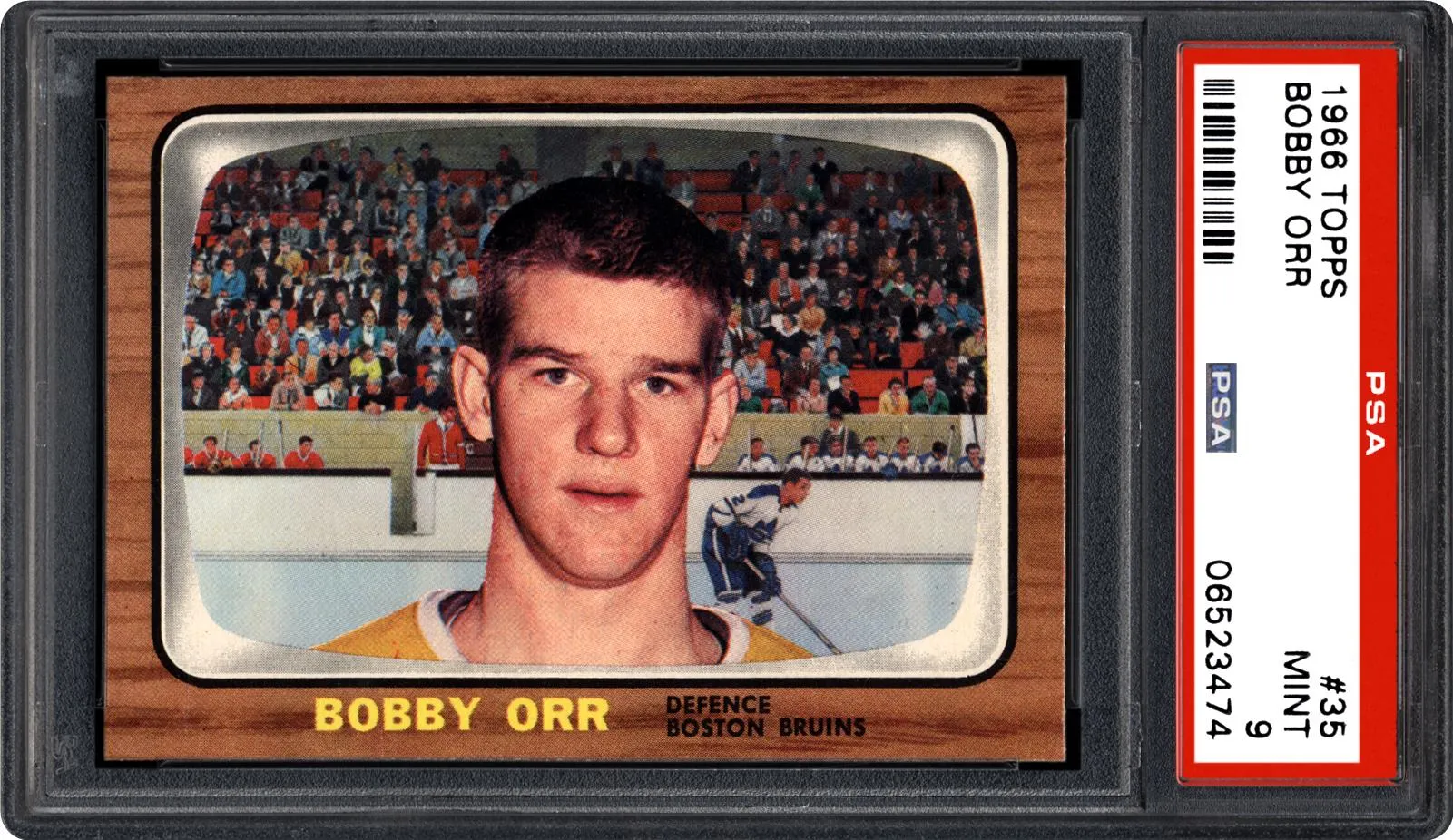
Professional grading companies like PSA, SGC, and Beckett assign numerical grades from 1 to 10. Even a small difference in grade can significantly impact value. For example:
- PSA 9 vs PSA 8 can mean double or triple the price
- PSA 10 examples of vintage hockey cards are extremely rare
- Lower-grade vintage cards may still hold value if the player is significant
Vintage hockey cards—especially O-Pee-Chee issues—are notoriously difficult to find in high grade due to rough cutting and production quality.
4. Scarcity and Print Quality
Many vintage hockey cards are rare today simply because:
- They were printed in limited quantities
- Many were discarded or damaged over time
- Kids originally used them for play rather than collecting
- Storage conditions were poor for decades
O-Pee-Chee cards, in particular, are known for inconsistent centering and rough edges, making gem mint examples extremely rare. Scarcity combined with condition creates major price differences in the market.
5. Market Demand and Collector Trends
Like all collectibles, hockey card values are influenced by demand. Key demand drivers include:
- Hall of Fame inductions
- Championship wins
- Media exposure or documentaries
- Player legacy and nostalgia
- Modern collecting trends (grading, investment demand)
For example, Wayne Gretzky’s legacy continues to keep his cards among the most valuable in the hobby, while modern stars like Connor McDavid are shaping the future of the market.
How Much Are My Hockey Cards Worth?
If you’re wondering how much are my hockey cards worth, the answer depends on a step-by-step evaluation process.
Step 1: Identify the Card
Start by identifying:
- Year
- Set (Topps, O-Pee-Chee, Parkhurst, etc.)
- Player name
- Card number
- Rookie designation (RC)
Accurate identification is essential before checking value.
Step 2: Check Recent Sales Data
The most reliable way to determine value is by looking at recent completed sales, not asking prices. Check platforms such as:
- eBay sold listings
- Auction house results
- Sports memorabilia marketplaces
This helps you understand what collectors are actually paying in today’s market.
Step 3: Compare Condition Carefully
Condition comparisons are critical when evaluating hockey card values. Even small differences—like slightly off-centering or soft corners—can significantly change value. Always compare your card to similarly graded or ungraded examples.
Step 4: Consider Market Timing
Prices fluctuate based on:
- Player popularity spikes
- Hall of Fame milestones
- Championship seasons
- Market demand shifts
Timing your sale can impact final value significantly.
Most Valuable Vintage Hockey Cards
While most collections contain common cards, a few vintage hockey cards are considered true “holy grails” of the hobby. Notable examples include:
- 1951 Parkhurst Gordie Howe rookie card
- 1954–55 Topps Gordie Howe
- 1958 Topps Bobby Hull rookie card
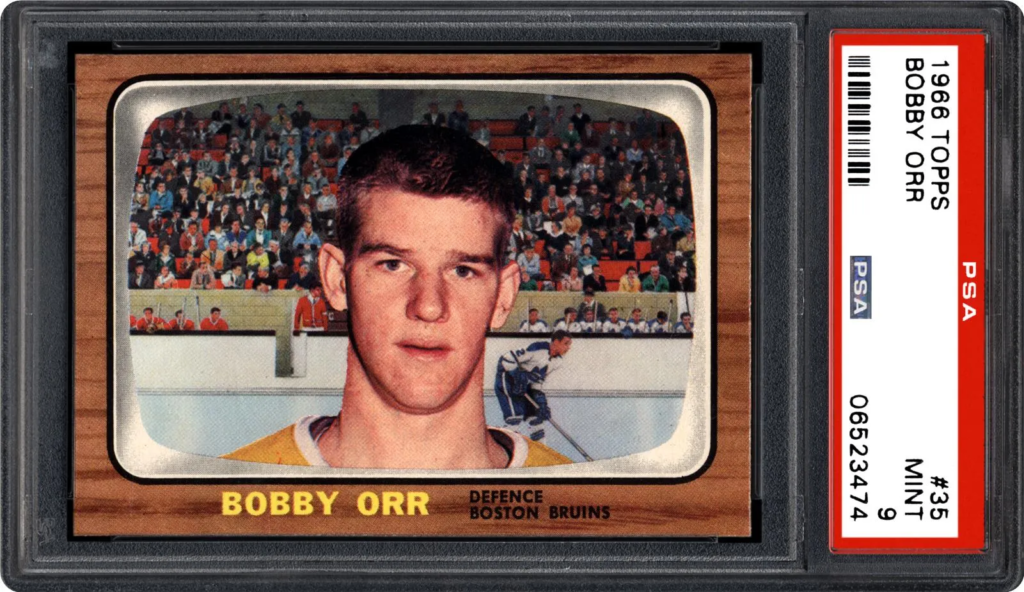
- 1966 Topps Bobby Orr rookie card
- 1968 Topps Stan Mikita rookie card
- 1971–72 O-Pee-Chee Bobby Clarke rookie card
- 1979–80 O-Pee-Chee Wayne Gretzky rookie card
- 1980s Mario Lemieux rookie cards (Topps/O-Pee-Chee)
- 1980s Patrick Roy rookie cards
- Early 1980s Wayne Gretzky second-year cards
These cards represent the most important eras in NHL history and remain highly desirable among collectors.
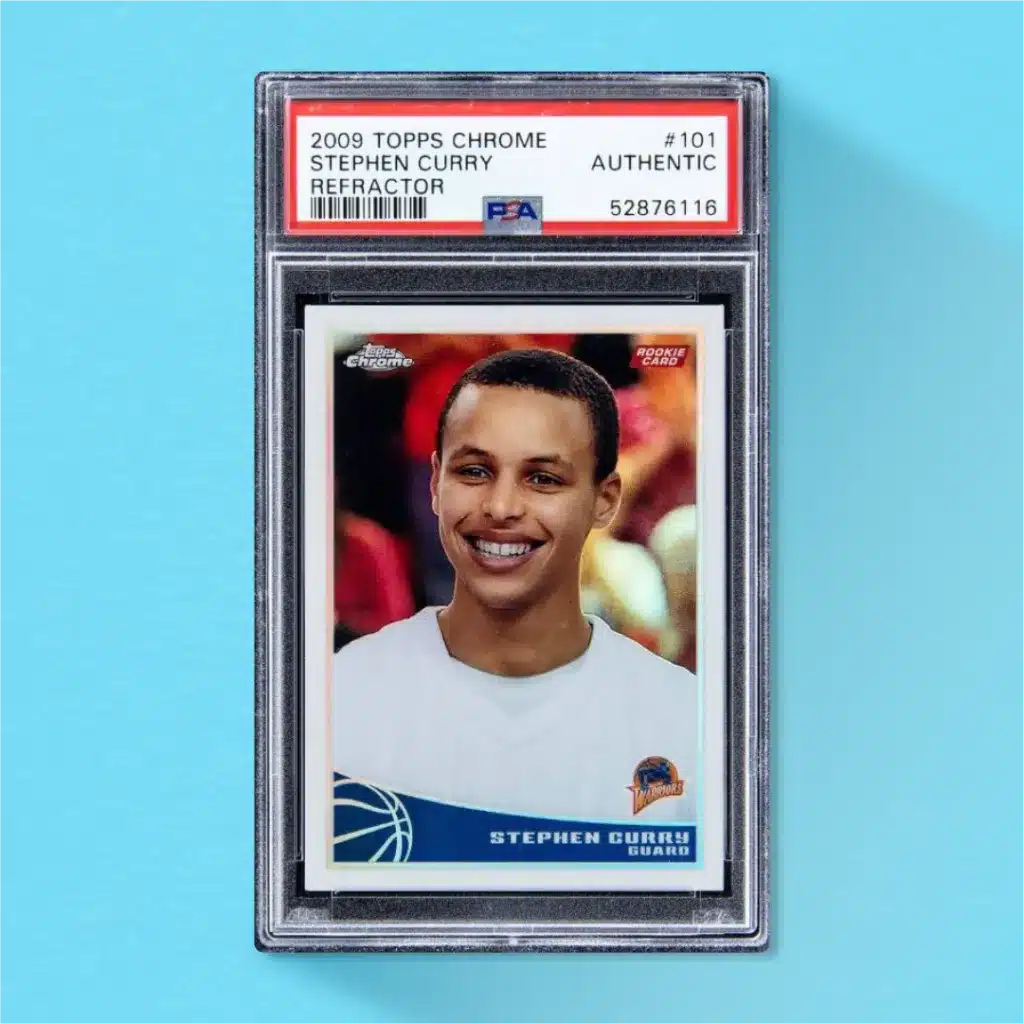
Should You Grade Your Hockey Cards?
Grading can significantly impact resale value, but it is not always necessary.
When grading makes sense:
- High-value rookie cards
- Hall of Fame players
- Cards in excellent condition
- Rare vintage issues with strong demand
When grading may not be worth it:
- Common base cards
- Heavily worn or damaged cards
- Low-value bulk collections
Because grading costs money and time, it should only be used when it increases potential resale value.
Tips for Selling Vintage Hockey Cards
If you plan to sell your collection, preparation is key to maximizing returns.
Organize Your Collection
Sort cards by:
- Year
- Player
- Set
- Condition
This makes evaluation easier for buyers and appraisers.
Take Clear, High-Quality Photos
Include front and back images with good lighting to accurately show condition.
Research Multiple Sources
To understand vintage hockey card prices, compare:
- Recent sold listings
- Auction results
- Market pricing guides
Avoid relying solely on outdated price guides.
Work With Trusted Buyers or Auction Houses
For valuable collections, professional sports card buyers or auction platforms often yield higher returns than quick private sales.
Common Mistakes When Evaluating Hockey Card Values
Many collectors misjudge their collections due to common errors:
- Assuming all old cards are valuable
- Confusing listing prices with sold prices
- Ignoring condition differences
- Overestimating common 1980s–1990s cards
- Not identifying key rookies or Hall of Famers
Proper evaluation requires careful research and comparison.
Final Thoughts on Vintage Hockey Card Prices
Understanding vintage hockey card prices is essential for anyone looking to evaluate or sell a collection. While many cards have modest value, others—especially rookie cards of legendary NHL players in high grade—can be extremely valuable. The most important factors remain consistent:
- Player significance
- Card condition
- Scarcity
- Market demand
Whether you are a long-time collector or just discovering an old collection, taking the time to properly evaluate your hockey cards can make a major difference in their true value. If you are unsure about your collection, a professional appraisal can help identify key cards and determine the best path forward for selling or preserving them.