Shipping sports cards safely is one of the most important skills for collectors, sellers, and dealers. Whether you’re sending a single rookie card, a graded PSA submission, or an entire collection, proper packaging ensures your cards arrive in the same condition they left. Sports cards are fragile, high-value collectibles that can easily be damaged by bending, moisture, or movement during transit. Even a small mistake—like loose packing or insufficient protection—can lead to creased corners or surface damage that significantly reduces value. In this guide, we’ll walk through exactly how to package sports cards for shipping, including essential supplies, professional packing methods, and best practices used by experienced card dealers.
Why Proper Sports Card Packaging Matters
Sports cards—especially vintage cards, rookie cards, autographs, and graded submissions—are highly sensitive to pressure and movement. During shipping, packages are often dropped, stacked, or exposed to vibration. Without proper protection, cards can suffer:
- Bent corners
- Surface scratches
- Edge wear
- Water damage
- Slippage inside holders
Professional sellers and grading companies use strict packaging standards because even minor damage can significantly reduce a card’s grade and resale value. Proper packaging is not just recommended—it is essential for protecting your investment.
Essential Supplies for Shipping Sports Cards
Before you begin packing, make sure you have the right materials. Using proper card protection products is the foundation of safe shipping.
1. Penny Sleeves
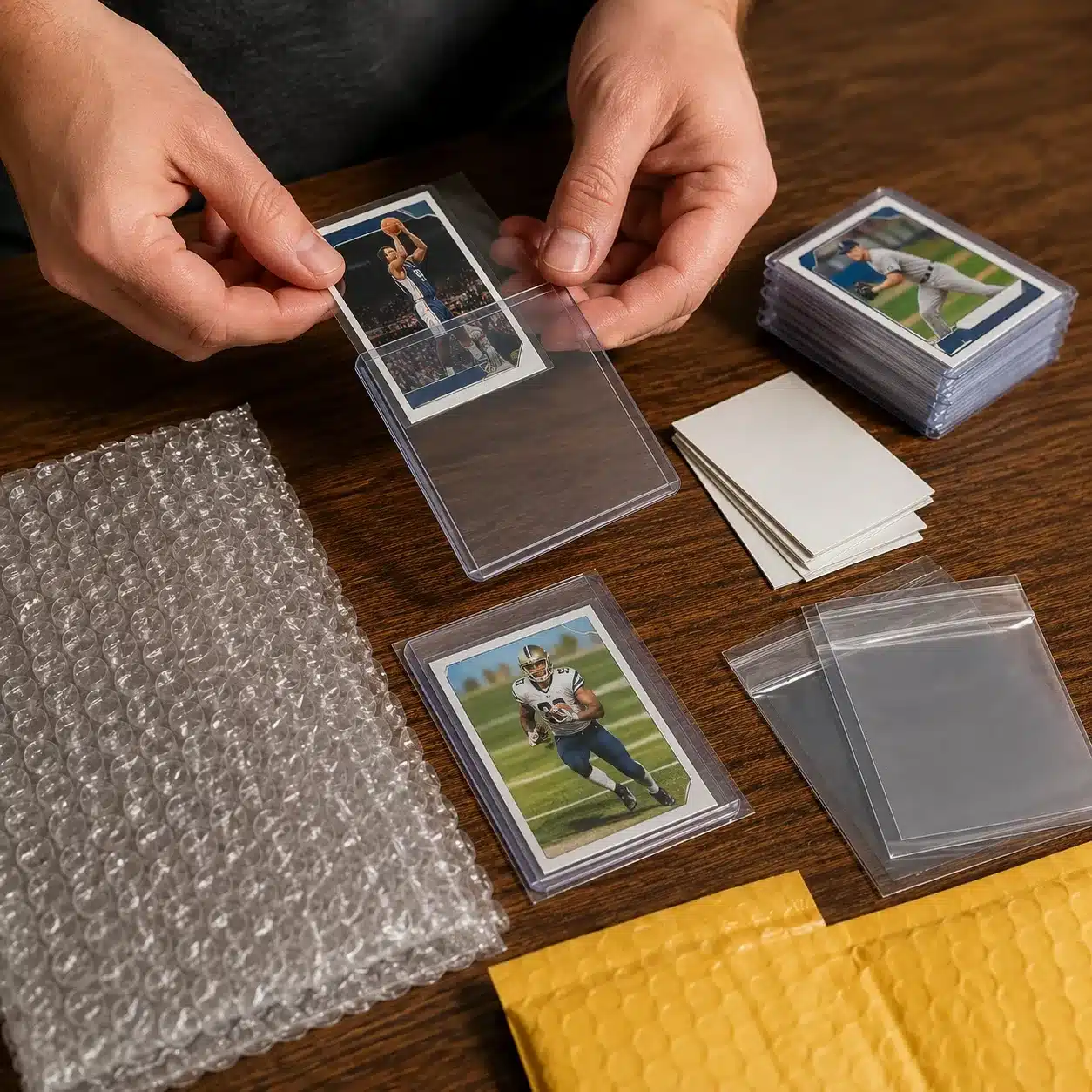
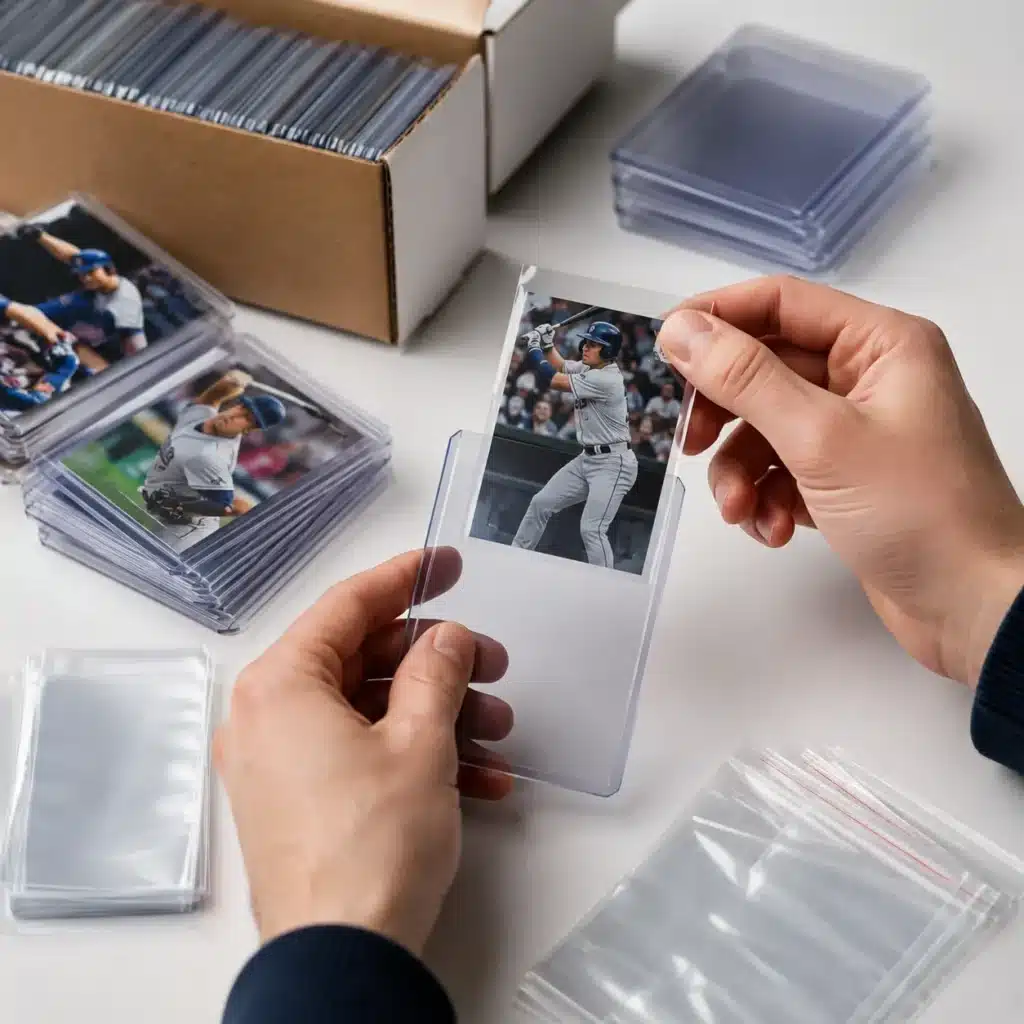
A penny sleeve is the first layer of protection for every card. These thin plastic sleeves protect against scratches, dust, and fingerprints. Every card should be placed in a penny sleeve before any additional packaging.
2. Semi-Rigid Holders (Card Saver I)
For valuable cards or grading submissions, use semi-rigid card holders, commonly known as Card Saver I. These holders:
- Prevent bending
- Keep the card stable
- Are preferred by grading companies
- Reduce movement during shipping
Many professional graders recommend Card Savers instead of bulky top loaders because they provide a more secure and flexible fit.
3. Top Loaders (Optional for Low-Value Cards)
Top loaders are rigid plastic holders that offer solid protection for everyday shipping. They are best for:
- Lower-value cards
- Quick sales
- Local shipping
However, they should always be secured properly to prevent cards from sliding out.
4. Team Bags or Poly Sleeves
A team bag (or resealable poly bag) keeps the sleeve and holder sealed together. This prevents the card from slipping out during transit.
5. Cardboard or Rigid Inserts
Cardboard sheets or rigid inserts help stabilize your card bundle. They prevent bending and provide structural protection inside envelopes or boxes.
6. Bubble Mailers or Shipping Boxes
Your outer packaging depends on order size:
- Bubble mailers: best for 1–3 cards
- Small boxes: best for larger shipments or high-value cards
Never ship valuable cards in a plain paper envelope.
Step-by-Step: How to Package Sports Cards for Shipping
Now let’s break down the exact process used by experienced card sellers.
Step 1: Place the Card in a Penny Sleeve
Start by gently inserting your card into a penny sleeve. Be careful not to:
- Touch the card surface
- Force the card into the sleeve
- Bend corners during insertion
For thicker cards (relics or patches), use a slightly larger sleeve designed for thicker stock.
Step 2: Insert Into a Card Saver or Top Loader
Once sleeved, place the card into a semi-rigid holder (Card Saver I) or a top loader.
- Card Saver = best for grading submissions and high-value cards
- Top loader = acceptable for standard shipping
Ensure the card sits fully inside and is not exposed at the top.
Step 3: Secure the Holder
To prevent movement:
- Place the holder inside a team bag
- Seal the bag tightly
- Optionally tape the top loader shut (light painter’s tape recommended)
This step prevents the card from sliding out during transit.
Step 4: Add Cardboard Protection
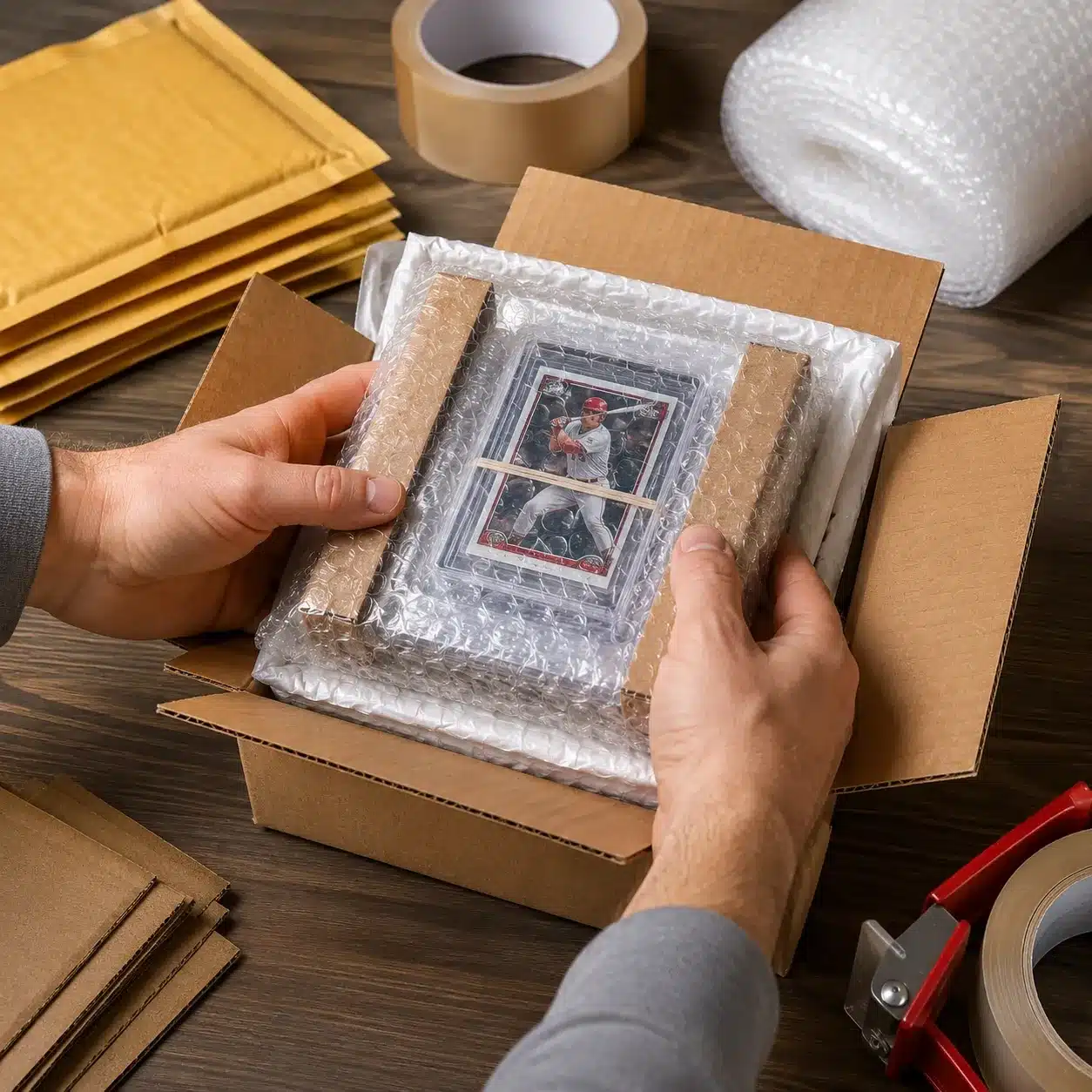
Next, sandwich the card between two pieces of cardboard. This helps:
- Prevent bending
- Add rigidity
- Stabilize the package
Secure the cardboard gently with rubber bands or tape (avoid taping directly onto the card holder).
Step 5: Wrap with Bubble Protection
Wrap the protected bundle in bubble wrap or padding material. Make sure:
- All sides are covered
- There is no movement inside the wrap
- Corners are well protected
This cushioning absorbs impact during shipping.
Step 6: Place into a Bubble Mailer or Box
For most single or small orders:
- Use a padded bubble mailer
- Fill empty space so nothing shifts
For larger shipments:
- Use a sturdy cardboard box
- Add extra padding (bubble wrap or packing paper)
- Ensure tight but not compressed fit
The goal is to eliminate movement without crushing the cards.
Step 7: Seal and Label the Package
Securely tape all edges of your mailer or box using strong packing tape. Include:
- Shipping label
- Return address
- Optional packing slip or inventory list
Make sure the label is flat and easy to scan.
Step 8: Add Tracking and Signature Confirmation
Always use tracking when shipping sports cards. For valuable cards, add:
- Signature confirmation
- Insurance (based on declared value)
This protects both buyer and seller and ensures safe delivery verification.
Best Practices for Shipping Sports Cards Safely
To avoid damage and disputes, follow these professional tips:
Don’t Overpack or Underpack
- Too tight = risk of pressure damage
- Too loose = movement causes corner wear
Balance is key.
Avoid Plain Envelopes
Never ship valuable cards in standard envelopes. They offer no structural protection and can easily bend.
Separate High-Value Cards
If shipping multiple valuable cards:
- Pack each individually
- Do not stack without protection layers
- Use multiple holders if needed
Use Consistent Orientation
Keep all cards facing the same direction to reduce internal shifting.
Double-Box for High-End Cards
For expensive or graded cards:
- Place inner box inside a larger box
- Add cushioning between layers
This significantly reduces risk of impact damage.
Common Mistakes When Shipping Sports Cards
Avoid these frequent errors:
- Skipping penny sleeves
- Using loose top loaders without sealing
- Over-taping directly onto holders
- Leaving empty space in the box
- Using flimsy envelopes
- Not using tracking
Even experienced sellers sometimes overlook these basics, but each one increases risk of damage.
Final Thoughts
Learning how to properly package sports cards for shipping is essential for anyone involved in buying, selling, or collecting trading cards. With the right supplies and careful handling, you can ensure your cards arrive safely every time. The key principles are simple:
- Protect each card individually
- Prevent movement at every stage
- Use rigid support and cushioning
- Always ship with tracking
Whether you’re mailing a single rookie card or an entire collection, proper packaging protects both value and reputation.