Where to Sell Baseball Cards: A Complete Guide for Collectors
If you have a baseball card collection sitting in a closet, attic, basement, or storage unit, you may be wondering where to sell baseball cards and how to make sure you get a fair price.
The good news is that there are more ways to sell baseball cards today than ever before. You can sell directly to a card shop or dealer, list cards individually on eBay, consign your collection, sell at a card show, or work with an auction house for particularly valuable cards.
But there is an important catch: the best place to sell depends on what you have.
Selling a $20 card is very different from selling a $20,000 vintage baseball card. And selling a few hundred desirable cards is different from selling an entire collection that contains thousands of cards.
This guide explains the major options and what to consider before you sell.
Where Can You Sell Baseball Cards?
The most common places to sell baseball cards are:
- Local card shops and dealers
- Baseball card buyers and collectors
- eBay and other online marketplaces
- Consignment services
- Card shows
- Auction houses
- Facebook groups and other collector communities
- Directly to another collector
Each option involves a different tradeoff between price, speed, convenience, and the amount of work you have to do yourself.
Before choosing where to sell, it helps to understand what your collection is actually worth.
1. Sell Your Baseball Cards to a Dealer or Card Buyer
For many people, selling directly to a card dealer is the simplest option.
A dealer can look through your collection, identify cards that have significant value, and make an offer for some or all of the collection. You don’t have to photograph every card, create hundreds of listings, answer messages from buyers, package individual orders, or deal with returns.
This can be particularly useful if you inherited a collection or have a large number of cards and simply want to turn them into cash.
The tradeoff is that a dealer needs to leave room for expenses and profit when purchasing cards. A dealer buying your cards outright generally cannot pay the same price that an individual collector might pay for a single card at retail.
However, comparing a dealer’s offer only to the highest possible online sale price can be misleading. Selling individually requires significant time, shipping materials, marketplace fees, customer service, and the risk that some cards take months to sell.
If your priority is a simple transaction for an entire collection, selling directly can make a lot of sense.
Selling baseball cards in Boston
If you’re in Massachusetts or the greater Boston area, Boston Card Exchange buys baseball card collections and individual cards.
We specialize in both vintage and modern sports cards and consider collections of all sizes. If you’re not sure what you have, you can contact us and we’ll help you determine the next step.
2. Sell Baseball Cards on eBay
eBay is one of the largest marketplaces for sports cards, making it an obvious option for collectors who want to sell individual cards themselves.
The biggest advantage is access to a large national and international audience. If you have a desirable card, there may be collectors actively looking for exactly that card.
eBay can work particularly well for:
- Valuable graded cards
- Star rookie cards
- Popular modern cards
- Autographs
- Numbered cards
- Vintage Hall of Fame cards
- Cards with plenty of recent sales data
The disadvantage is the amount of work involved.
You need to identify the cards, research prices, take photographs, write listings, answer questions, package cards, ship orders, handle returns, and keep track of everything.
Marketplace fees also reduce the amount you ultimately receive.
For someone with 20 valuable cards, that work may be reasonable. For someone with 5,000 cards, listing every card individually may not make economic sense.
One useful rule is to check completed or sold sales rather than relying on asking prices. A card listed for $500 isn’t necessarily worth $500. What matters is what comparable cards have actually sold for.
3. Consign Your Baseball Cards
Consignment sits between selling your cards yourself and selling directly to a dealer.
With consignment, you give your cards to a company or dealer that handles the selling process for you. Depending on the service, they may photograph, list, store, promote, ship, and handle customer service for your cards.
You receive the proceeds after the applicable commission or fees.
Consignment can be attractive when you have cards that are valuable enough to justify professional selling but don’t want to do all the work yourself.
It can also be useful when you have a collection containing many individual cards that need to be sold separately.
The key question is not simply “What is the commission?”
Instead, ask:
How much will I actually receive after everything is sold?
A service charging a commission but achieving stronger prices may potentially leave you with more money than a cheaper service that produces weaker sales.
4. Sell at a Baseball Card Show
Card shows can be a good way to sell cards directly to dealers and collectors.
You can bring your cards to a show, walk around, and ask multiple dealers what they would pay.
This has one major advantage: you can compare offers.
Card shows can be especially useful for collections containing vintage cards, graded cards, stars, autographs, and other cards that dealers can evaluate quickly.
The downside is that you have to transport the collection to the show, spend time talking to dealers, and potentially negotiate several different offers.
If you’re selling a large collection, you may also want to contact dealers before the show to determine whether they are interested in buying large collections.
5. Sell Valuable Cards Through an Auction House
If you have an exceptionally valuable baseball card, a major auction house may be worth considering.
Auction houses are designed to bring multiple serious buyers together, which can be particularly important for rare or high-dollar cards.
This is generally more relevant for cards worth hundreds, thousands, or tens of thousands of dollars than for ordinary commons.
For example, a rare vintage Hall of Famer, high-grade prewar card, extremely scarce modern card, or important piece of baseball history may attract a very different buyer pool than a typical $20 card.
Auction houses also handle much of the selling process for you.
However, auctions aren’t necessarily the right answer for every card. They can involve longer timelines, consignment agreements, commissions, buyer premiums, and specific requirements for the material they accept.
For a large collection, you may also want to consider whether every card belongs in an auction. Sometimes the highest-value cards deserve one selling strategy while the rest of the collection is better handled another way.
6. Sell Directly to Another Collector
You can also sell baseball cards directly to collectors through hobby groups, social media, card forums, and personal networks.
The advantage is that you may be able to eliminate some marketplace fees and connect directly with someone who specifically wants your cards.
For example, a collector looking for a particular vintage set might be very interested in a group of cards that would be less interesting to a general marketplace buyer.
The downside is that direct transactions require more work and caution.
You need to establish a price, determine payment and shipping arrangements, and make sure both parties are comfortable with the transaction.
For expensive cards, using an established marketplace or reputable dealer can provide additional transaction protections.
How Much Are Your Baseball Cards Worth?
Before deciding where to sell, you need a reasonable idea of what you actually own.
Start by separating your collection into categories.
Vintage baseball cards
Cards from the 1980s and earlier deserve particular attention. Depending on the year, player, condition, and scarcity, vintage cards can range from essentially nominal value to thousands or even much more.
Look carefully for Hall of Famers and important rookie cards.
Modern baseball cards
Modern cards can also be valuable, particularly rookie cards, autographs, serial-numbered cards, rare parallels, and high-grade cards of popular players.
But don’t assume that a modern card is valuable simply because it is old enough to be collectible. Production quantities vary enormously between sets and years.
Graded baseball cards
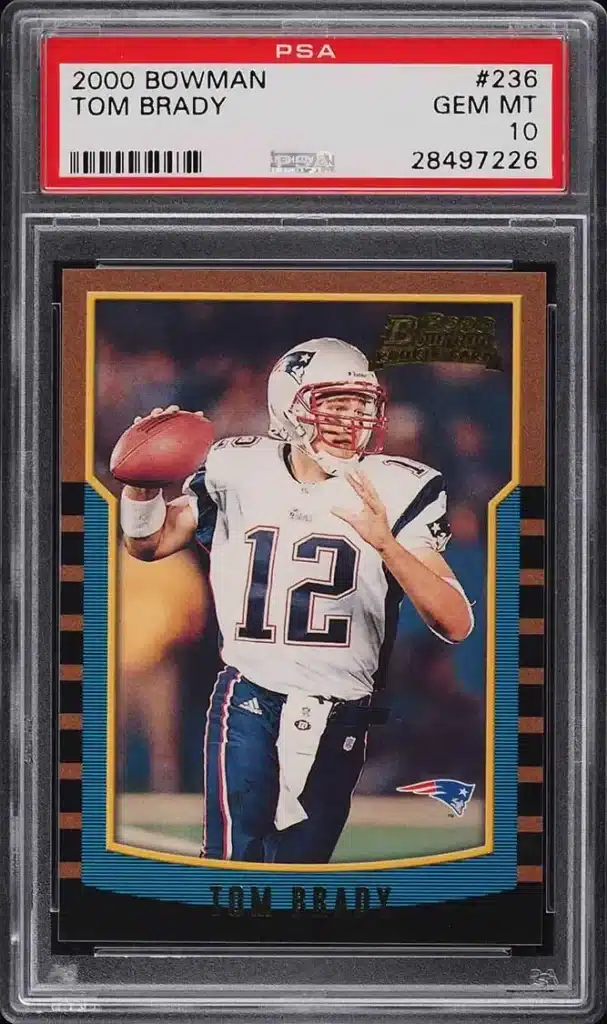
PSA, SGC, BGS, and other graded cards should generally be evaluated separately from raw cards.
The grade can have a substantial effect on the value of a card, particularly when comparing high grades with lower grades.
Bulk cards
Most large collections contain a substantial amount of material that has relatively little value individually.
That doesn’t necessarily mean it has no value. The important question is whether it makes sense to sell those cards individually.
For many collections, grouping cards by player, team, year, or set is more practical than listing hundreds or thousands of inexpensive cards one at a time.
Don’t Throw Out the “Commons” Too Quickly
One of the biggest mistakes people make when selling an inherited baseball card collection is assuming that anything that doesn’t look valuable is worthless.
Some older commons can have collector demand because they complete sets. Others can be desirable because of condition, variations, scarcity, or the particular year and set.
You don’t need to become an expert before selling your collection.
Instead, have someone knowledgeable look through it before you start throwing cards away or selling everything as bulk.
Should You Sell the Entire Collection or Individual Cards?
This is one of the most important decisions you’ll make.
If you have a small number of valuable cards, selling them individually may make sense.
If you have thousands of cards, the calculation changes.
Imagine you have 2,000 cards. You could theoretically research, photograph, list, package, and ship each card individually.
But even if you spend only five minutes per card, that’s more than 160 hours of work.
And five minutes is extremely optimistic once you include pricing, messages, packing, shipping, and problem orders.
For a large collection, getting a professional evaluation and selling some or all of the collection together can be considerably simpler.
Where to Sell Baseball Cards in Boston
If you’re searching for where to sell baseball cards in Boston, you have several options, including local card shops, shows, online marketplaces, and dealers.
The right choice depends on the collection.
If you want to sell a few cards yourself, an online marketplace may make sense.
If you have a large inherited collection and want someone to evaluate everything, a local buyer may be more convenient.
If you have a small number of extremely valuable cards, you may want to explore consignment or specialized auction options.
Boston Card Exchange works with collectors throughout the Boston area who want to sell baseball cards and larger sports card collections.
We buy collections outright and also offer consignment for collectors who would prefer to have us handle the selling process. Our focus includes vintage and modern sports cards.
What Should You Do Before Selling Your Collection?
Before contacting a buyer, you don’t need to organize every card perfectly.
But a few things can help:
- Don’t clean or alter the cards. Attempting to improve the appearance of an old card can damage it.
- Separate obvious valuable cards. Pull out Hall of Famers, rookie cards, graded cards, autographs, and unusual cards if you can identify them.
- Keep the collection together initially. Don’t throw away cards simply because you don’t recognize the players.
- Take a few photos. Photos of the collection can help a potential buyer understand what you’re working with.
- Get more than one opinion for a valuable collection. Particularly for high-value vintage cards, independent opinions can be useful.
- Ask how the offer was determined. A reputable buyer should be able to explain what they’re seeing in the collection.
So, Where Is the Best Place to Sell Baseball Cards?
There isn’t one answer for every collection.
If you want maximum control and don’t mind doing the work, selling individual cards online can be an option.
If you want convenience, selling directly to a dealer may be preferable.
If you want someone else to handle the selling process while you retain an interest in the final proceeds, consignment may be worth considering.
And if you have exceptionally valuable cards, specialized auction houses can provide access to serious collectors and competitive bidders.
The most important thing is to match the selling method to the cards you actually own.
A shoebox of common 1980s cards, a collection of 1950s Hall of Famers, and a PSA-graded modern rookie card should not necessarily be sold the same way.
Ready to find out what your baseball cards are worth?
If you’re in Boston or anywhere in Massachusetts and you’re thinking about selling a baseball card collection, Boston Card Exchange can help.
We buy baseball cards and larger sports card collections, and we also offer consignment for collectors who would rather have someone else handle the selling process.
You don’t need to know exactly what you have before contacting us.
[Contact Boston Card Exchange to have your collection evaluated.]