1987 Topps Baseball Cards: Key Collecting Tips
If you collected cards in the late 1980s, you can probably picture them without trying: faux wood-grain borders, bold team colors, and a pack smell that lives rent-free in your memory. 1987 Topps baseball cards are one of the most recognizable sets ever made, and they remain a favorite for nostalgic collectors, set builders, and anyone looking for an affordable way to own pieces of baseball history.
This guide covers what makes the 1987 Topps set special, which cards to know, what to look for when you are buying, and how to approach grading. Whether you are chasing a Barry Bonds rookie or putting together a complete set, here is where to start.
What Makes 1987 Topps Baseball Cards Special
Topps was the dominant name in baseball cards for decades, and its 1987 release is a perfect snapshot of the hobby at a turning point. The design is immediately identifiable thanks to its wood-grain borders, which gave the set a warm, retro look that stood out on card shop shelves and in school lunchrooms alike. Love it or hate it, no one forgets it.
The main set contains 792 cards, covering stars, role players, team leaders, managers, and all-star selections. Beyond the base set, Topps also released a Traded set later in the season to capture rookies and players who had changed teams.
Three things keep the 1987 Topps set relevant today:
- Nostalgia. Collectors who grew up in the 1980s are now adults with the means and motivation to chase the cards they remember.
- Star power. The set includes early cards of future Hall of Famers and some of the most productive players of the era.
- Affordability. Because Topps printed these cards in massive quantities, many are inexpensive, which makes the set approachable for newer collectors.
The Junk Wax Question
You have probably heard the phrase “junk wax era.” It refers to a period in the late 1980s and early 1990s when card companies produced enormous quantities of cards, flooding the market and keeping prices low. The 1987 Topps set is a classic example. Millions of cards were printed, and unopened packs and boxes can still be found today.
But “junk wax” does not mean “worthless.” It simply means that common cards are common. The value in the set tends to live in two places: key rookie cards and high-grade copies. Even in a flooded market, truly pristine examples of the best cards can carry a premium, because finding a flawless card is harder than it sounds.
Key Cards to Know in the 1987 Topps Set
Here are some of the most popular cards collectors look for.
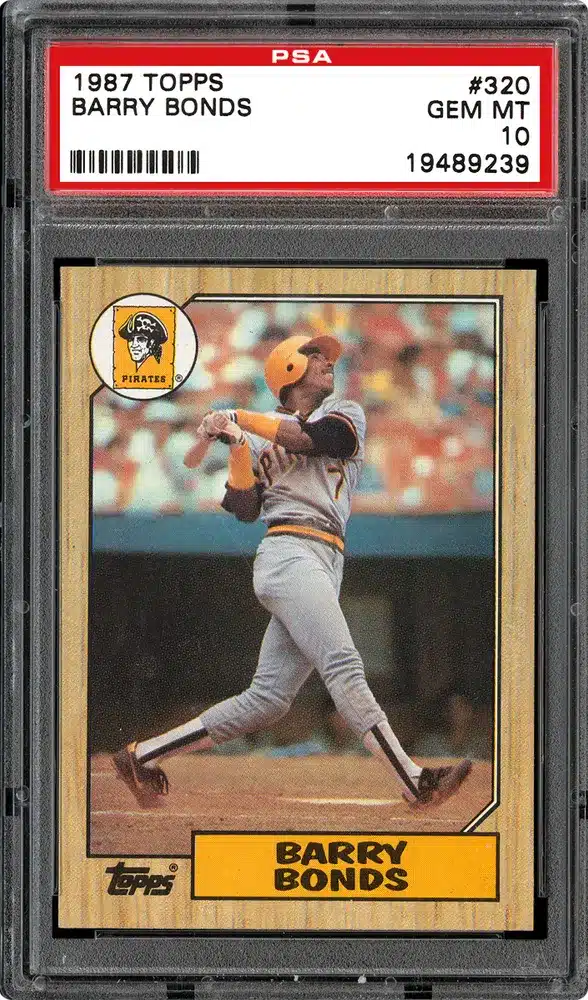
Barry Bonds #320
Bonds’ 1987 Topps card is one of the best-known cards in the set. He went on to become the all-time home run leader, a seven-time MVP, and one of the most dominant hitters in baseball history. His career remains a topic of debate, but there is no denying his impact on the sport and on the card market.
Mark McGwire #366
McGwire’s 1987 Topps card is a hobby favorite, capturing the slugger around the time he became a household name after hitting a then-rookie record 49 home runs for Oakland. For many collectors, it is a nostalgia piece tied to the Bash Brothers era.
Barry Larkin #648 and Rafael Palmeiro #634
Both players became stars, and both have loyal collector followings. These cards are often more affordable than the headline names, which makes them nice additions for set builders.
Bo Jackson #170
Few athletes captured the public imagination like Bo Jackson, and his 1987 Topps card remains popular with baseball and football fans alike.
Red Sox Stars
For Boston collectors, the set has an extra layer of appeal. The 1986 American League champion Red Sox are well represented, including Roger Clemens, who had just won both the AL MVP and Cy Young Award, and Wade Boggs, who captured another batting title. These cards are a fun way to relive the heartbreak and excitement of that unforgettable October.
Hall of Famers and Veterans
The set also features established legends and stars from the era, such as Cal Ripken Jr., Ozzie Smith, Kirby Puckett, and many more. Even if they are not rookies, these cards are popular for team sets, player collections, and nostalgia.
What Determines the Value of 1987 Topps Cards
Because the set was so heavily produced, value comes down to a few core factors.
Player and card significance. A Hall of Famer or rookie card will almost always be worth more than a common role player. The better the player and the more important the card, the higher the demand.
Condition. For modern-era cards like these, condition is everything. A raw card in average shape might sell for pocket change, while a graded gem mint copy of a key card can command many times that amount.
Grade and grading company. Cards graded by PSA, Beckett (BGS), SGC, or CGC carry authentication and a standardized condition score. The company and the grade both affect resale value.
Scarcity at the top. Even though the set is plentiful, high-grade examples are harder to find. Many cards suffer from flaws that prevent top grades, and population reports show how few copies reach the highest levels.
Market demand. Prices rise and fall with nostalgia cycles, Hall of Fame news, and the overall health of the hobby. Always check recent sold listings for the specific card and grade you want.
The Wood-Grain Challenge: Why Condition Matters
Here is something every 1987 Topps collector learns quickly: those wood-grain borders are tough on condition. The dark, textured borders make chipping and edge wear hard to detect when analyzing, so they often receive lower grades than expected.
That is why gem mint copies of key cards are much harder to find than the production numbers would suggest. When you shop, pay close attention to:
- Centering. Check that the borders are even on all four sides.
- Corners. Look for sharp points without fraying or rounding.
- Edges. Scan the border for white chipping or roughness.
- Surface. Tilt the card under a light to spot print lines, scratches, or dimples.
Should You Grade Your 1987 Topps Cards?
Grading costs money, and with a set that produced so many cards, it is not worth sending in everything. A smart approach:
- Grade the keys. Focus on rookies and star cards that look to be in excellent condition.
- Be realistic. Examine centering, corners, and edges honestly before you submit. A card that looks good at a glance may not earn a top grade.
- Consider the math. Compare the cost of grading against the likely sale price of a high-grade copy. If the numbers do not work, you may be better off keeping the card raw.
For common cards, grading rarely makes financial sense, though some collectors grade favorites for sentimental reasons or to complete a graded set.
Different Ways to Collect 1987 Topps
One of the best things about this set is the variety of ways to enjoy it.
Build the complete set. Putting together all 792 cards is a rewarding project and typically budget-friendly. You can buy cards in lots, track down the stragglers one at a time, or purchase a complete set and upgrade key cards.
Chase the stars. If you only want the best cards, focus on rookies and Hall of Famers.
Collect your team. Boston fans can build a Red Sox team set capturing the 1986 pennant winners.
Buy sealed product. Unopened wax packs, boxes, and factory sets are popular with collectors who enjoy the thrill of opening a piece of the past. Keep in mind that sealed product carries its own risks, so buy from trusted sellers and ask about storage history and authenticity.
Hunt variations. Topps also produced special limited versions of some sets in the era, such as glossy Tiffany sets. Make sure any special version is properly identified before you pay a premium.
Tips for Buying 1987 Topps Baseball Cards
- Compare sold prices, not asking prices. Recent completed sales give you a realistic picture of value.
- Request clear photos. For raw cards, you want sharp images of the front and back.
- Buy from reputable sellers. Look for clear return policies and positive feedback.
- Check graded cards. Verify certification numbers on the grading company’s website.
- Store your cards properly. Use penny sleeves, top loaders, or storage boxes, and keep cards away from heat, moisture, and sunlight.
Frequently Asked Questions
Are 1987 Topps baseball cards worth anything? Most common cards are worth little, but key rookies, stars, and high-grade copies can carry value. Condition and player significance are the biggest factors.
How many cards are in the 1987 Topps set? The main set contains 792 cards, with a separate Traded set released later.
What is the most valuable 1987 Topps card? That depends on the grade and market conditions, but key rookies such as Barry Bonds are among the most sought-after. Check recent sales for current pricing.
Why do 1987 Topps cards have wood borders? The wood-grain design was Topps’ signature look for the set. It makes the cards instantly recognizable, though it also makes edge wear easy to spot.
Are unopened 1987 Topps packs worth buying? They can be fun and nostalgic, but their value varies and they should be purchased from reputable sellers. Do not expect guaranteed returns.
Shop 1987 Topps Baseball Cards at Boston Card Exchange
1987 Topps baseball cards are a window into an unforgettable era of the hobby, with iconic design, memorable players, and plenty of affordable ways to build a collection. Whether you want a Bonds rookie, a Red Sox favorite, or a complete set, there is a path for every budget.
Ready to start your collection? Browse our selection at Boston Card Exchange, and let us know if you need help finding the right cards.